Showing posts with label unions. Show all posts

Tuesday, December 18

The Job Bored: Katsup Edition


  • Scandal over illegal workers and clashes with unions over Social Security overhaul ousts government's head of labor. In Greece. Had you fooled for a minute though, right? [NYT]

  • The Killers back in court on former manager's $3 mil. unpaid commision suit. We know this just happened, but the Killers are so five minutes ago. [TMZ.com (it's a gossip website - ask your wife/daughter)]

More After the Jump...

Monday, December 17

Haste Makes Waste? Unions Feeling Flattened by Busy Board


[Ed. note: I really wanted to figure out how to put the phrase "churning urn of burning funk" in the title somewhere, but god help me, I'm just too tired.]

They're protesting in D.C. Using catchy nicknames. American Rights at Work has started a blog. The ABA is having a conference, for chrissakes. Clearly, something is going on over at the NLRB.

It has been dubbed the "September Steamroll": 61 decisions in the course of a few weeks that, according to the labor folks, are a big high-five to anti-union emoployers and a different gesture - using a few less fingers - to the unions trying to organize them.

The unions say that the prolific actions of the National Labor Relations Board this fall, including some big ones we missed reporting on around here (citing), are a last-ditch effort by a Bush-appointed Board to "do as much damage as possble".

A summary of the big decisions and some coverage of the debate over their importance appears after the jump.

On November 15 union supporters marched through D.C. in protest of the "steamroll", carrying super clever signs that said "NLRB: Close it For Renovations" (whoever's writing for these guys should help out the WGA). In fairness, they also had signs that said something about the Employee Free Choice Act - boo-ring! Pick one protest and stick to it, huh?

The mass of decisions includes cases like Toering Electric Co. (blog post here), which further eroded the already tenuous protection afforded to union salts, and a doozy called Dana Corp. that overhauled (some would say eliminated) the ability of a union to be voted in by card check.

The WaPo article on the protests quotes former board members as saying that this is just a busy board trying to get in cases before the end of the year, and of course they're going to side with business, because the majority is republican. But there's another quote in the piece that makes this impartial observer think twice. From Chairman Battista's prepared statement:


If these groups truly believe that our recent decisions are not consistent with the National Labor Relations Act, they are free to challenge those decisions in court -- either directly in those cases in which they are a party, or they can assist in such a challenge in those cases where they are not a party," Battista said in the statement. "I am confident that our decisions will be upheld on review.

Confident? Yeah, I bet he is.

The unions are focused too much on the short term. The Board isn't racing because they've only got until 2008. If the Board is truly pro-business (as has been recently alleged) it's had this gun cocked a long time. All that's happened now is that John Roberts showed up and pulled the trigger.

If you were the NLRB, and you'd been wishing you could favor business and screw unions if only the courts wouldn't get in your way, and then Roberts shows up and starts throwing out $80 million cigarrette verdicts and giving pension plans automatic subrogation rights on participant personal injury judgments, wouldn't you get a little more ballsy? The way I see it, Battista & Co. are throwing down a gauntlet - waiting for someone to roll this heavy machinery across town and see what happens.

But, like most steamrollers, this one's bound to move pretty damn slow (pertinent holiday exceptions noted). And in the meantime, expect these decisions to make their way up federal circuits that will start to look more and more disjointed, between conflicting rulings and the inevitable change of personnel at the Board next fall.

Not a bad time to be entering the L&E world, huh? Speaking of which, back to finals. See everyone soon.

More After the Jump...

Wednesday, November 21

How the ____ Stole ____


There were too many funny headline options, so this is a choose-your-own joke post.

The AP is reporting that a NY Supreme Court Judge has granted an injunction against the Broadway lockout for at least one show: How the Grinch Stole Christmas.

From the article:

"I'm going to grant the injunction" against the lockout, state Supreme Court Justice Helen Freedman said Wednesday. "I think one Grinch in town is enough."

Her ruling came a day after she heard arguments from producers of the show and owners of the theater housing the $6 million production. Producers, citing a special contract between the show and Jujamcyn Theaters, wanted the show to go on.

So, who's the Grinch and what are they stealing? So many options... Feel free to discuss.

More After the Jump...

Friday, November 9

WGA Strikers Blog

If you're interested at all in the writer's strike, check out United Hollywood, an unofficial blog started by some of the strike captains. There's information about the strike, photos of famous people and comments from strikers on how things are going. Our current favorite:

CHELSEA PIERS, NYC: All Jacked Up
"One guy from our group got hassled by some stockbroker-looking dude who was screaming 'Get back to work! I don't want 24 to be cancelled!' He was serious."


We're adding United Hollywood to our roll (on the right column) in case you forget about it later.

More After the Jump...

Thursday, November 8

Writer's Strike: Lawyers are Busy, Writers are Solid and Michael Eisner Cares?


Here's some randoms on the Writer's Guild of America Strike, Day 3:

Entertainment Lawyers can't get off the phone, according to the ABA.

Apparently no one remembers the last writer's strike, so none of the writers know what they can and can't do. The WGA told writer-directors (aka show runners) that they couldn't do any "writing services", and so far they've just gone along with it. But now that the WGA is ordering scripts turned in (so no one does any under-the-table creativity shilling) the questions are pouring into attorney's offices. Plus, the shows have to be replaced, and somebody's gotta negotiate and write up the contracts.

"Hollywood is not Flint, Mich. It's not Allentown, Pa."

The biggest issue facing the picketing writers wasn't the studios so much as the other two unions, the Director's Guild and Screen Actor's Guild, so says Tim Goodman at the SF Chronicle:

The cynical in Hollywood - and that's a town built wholly on the failed dreams of the jaded and the bitter - suggested that the agendas of the members of the three unions were, roughly in this order: "looking out for myself," "getting what's rightfully mine" and "bleep the other guys."

But then, as we previously mentioned, the show runners (directors and writers) joined the strike. And the stars showed up. And the "no-strike clauses" in those union contracts started to look a little thin. According to the piece, there's been an email from producer Shawn Ryan (the Shield, the Unit) "floating around" that kind of summed it up:
I obviously will not write on my shows. But I also will not edit, I will not cast, I will not look at location photos, I will not get on the phone with the network and studio, I will not prep directors, I will not review mixes. I can't in good conscience fight these bastards with one hand, while operating an Avid with the other. I am on strike and I am not working for them. PERIOD.

If you're a network exec, and you expected all these people to be working on scripts and now the people haven't shown up and the scripts are confiscated, you may be a little more willing to negotiate? Hmm? Maybe LA's more like Flint than they'll admit.

"The only real winner here is Steve Jobs. They should be striking up at Cupertino or wherever he is."

The WGA strike does have it's detracters, though. If this is going to sell, we'll need a good villain. Someone get on the phone and see if Michael Eisner's available. He is? Of course he is.

Eisner, the former Disney CEO, was speaking before some "we're all rich enough to think about money" club and said the following:
For a writer to give up today's money for a nonexistent piece of the future -- they should do it in three years, shouldn't be doing it now -- they are misguided they should not have gone on the strike. I've seen stupid strikes, I've seen less stupid strikes, and this strike is just a stupid strike.

Hmm. "Stupid" and "Less Stupid". That joke kind of sells itself. Eisner went on to say the writer's didn't put blame on the right people, faulting the networks instead of Steve Jobs and Apple. Word to the wise: Don't take your financial advice from the guy who recommended Ovitz to the Board at Disney.

More After the Jump...

Wednesday, November 7

The Writer's Strike Not Entertaining, Apparently Serious


We're going to assume that the basics of the Writer's Guild strike, now in its 3rd day, are apparent to everyone reading, mostly since it's getting more press than the entire UAW 3-way negotiations and strikes combined.

If you don't know what's going on, here's a good synopsis from Reuters.

Upon hearing of the strike, our initial thought was how great the chants were going to be. This was clearly misguided. From the LA Times:

In Los Angeles, striking screenwriters chanted, "Network bosses, rich and rude, we don't like your attitude!"
[sigh] Really? We hoped for so much more. Forgive us for expecting brilliance, but isn't the team from "the Office" out there?

As per usual, the MSM gets stuck on a tangent. Most of the news reports are focusing on the lack of new programming and the big names supporting the strikers (Jay Leno had Kispy Kremes, Eva Longoria had - herself) and walking the picket line like Paul Haggis and Robert Towne. But don't think for a minute that this isn't a real strike, with consequences that go far beyond our ability to enjoy non-reality television.

The LA Times article points out (albeit at the very end) that this strike effects a lot more regular, workhorse, paycheck-to-paycheck writers than it does Oscar winners and millionaires.
Although top screenwriters like Haggis can make as much as $250,000 a week, many WGA members collect middle-class wages and can go months between jobs; the threat of an extended work stoppage could have grave consequences for the industry's lesser lights.


And, unlike most strikers, many writers have other responsibilities on set, like executive producer status (called "show runners") or pod deals where the studio gives them development money that pays administrative salaries. The networks are starting to pull those funds now, which means non-union employees could be laid off as soon as this weekend.

According to Business Week, everyone involved is projecting a pretty drawn-out process here, with no negotiations officially scheduled anytime soon. Teamsters in LA refused to cross the picket line, as did Steve Carell, apparently against Screen Actor's Guild rules (we're putting our celebrity stuff at the end, see?). Amy Pohler joined the SNL writers on the line in NY.

If you are in southern California, and are interested, here is a list of the strike locations.

More After the Jump...

Thursday, November 1

Chrysler Waits Obligitory 5-day Period Between 1st Date and Massive Layoffs

We're sure you've heard by now that Chrysler is showing its hand after avoiding the GM security promise during its latest contract talks. The now-private company let out that it may cut up to 10,000 jobs.

Not having the capacity or interest (or meager financial support) of official news outlets, we've waited for the story on the layoffs effects on Ford's still-pending UAW negotiations so we can poach it for our own article here.

From Reuters:

Jerry Tucker, a former UAW regional director who lobbied against the Chrysler and GM contracts, said Ford workers may feel a sense of betrayal to a point, but that would not necessarily keep them from approving a contract.

"Ford workers should look at this just the same, that they could ratify an agreement one day and see massive cutbacks the next day," Tucker said.

The analysists seem to be agreeing with Mr. Tucker. Consensus is that Chrysler's layoffs will make it exceedingly difficult for Ford to get the concessions it needs, because now the UAW looks emaciated. It's sitting in the middle of the negotiations with battered union syndrome.

While we wouldn't go as far as some and call this a "death knell" of the old school smokestack union, it is a blow to their status.

From the NY Times today:
Thursday’s additional job cuts could leave egg on the face of the auto unions. As Daimler prepared to sell Chrysler, Buzz Hargrove, the head of the Canadian Auto Workers Union, said that handing the company keys to a buyout firm would be the “worst-case” scenario.

“Our fear is private equity,” Mr. Hargrove told The Washington Post in March. “They are not out to build cars. It could mean throwing a lot of people out of work and then reselling” the company.”

Yet the unions were brought round to Cerberus as a new owner. In a statement announcing the Chrysler sale, the United Automobile Workers’ president, Ron Gettelfinger, said the deal “was in the best interests of our U.A.W. members, the Chrysler Group and Daimler.”

And elsewhere in the Times:

The U.A.W. did not comment. But one dissident union leader, Gregg Shotwell, said Chrysler’s actions threatened to create general distrust and divisiveness within the union.

Union leaders “certainly deserve to be distrusted because they misled people,” said Mr. Shotwell, whose group, Soldiers of Solidarity, campaigned against the versions of the U.A.W. contract that passed at Chrysler and G.M. “This has opened up people’s eyes.”

That idea has Wired News (yeah, we don't know either) saying Chrysler's private equity model will do away with unions entirely:

Cerberus [Chrysler's parent co.] has made noises about profit sharing with its workers, which has been Silicon Valley's preferred defense against unions. And even many UAW workers agree that smokestack unions everywhere are outmoded, inefficient and often corrupt. No doubt, profit sharing is the way of the future.

The big question in the short run is: what does Ford do now? They're arguably the farthest away from a recovery, and now they've got an expiring contract and a Union that's been striking for fun lately but still feels like it's against the wind.

And whose fault is it? Feel free to post your Detroit Diatribe in the comments.

More After the Jump...

Monday, October 29

Who's Running Things in D-Town?

One of the big-picture things that has been overlooked for the most part during this round of negotiations in Detroit is the fractured results. After the GM deal came in, pundits began debating the balance of interests in the contract, assuming it would be the boilerplate for the other two members of the little-big 3. Now that the Chrysler contract is (barely) a done deal, and offers a lot less job security to the employees, those same brains are starting to wonder if the Ford talks are going to go even farther toward the “look-we’re-trying-to-stay-in-business” talks of the airline industry during the United bankruptcy.

From the NY Times (via Workplace Prof Blog):

Talks [at Ford], which continued at a slow pace during the Chrysler vote, are expected to step up over the weekend. Generally, the U.A.W. expects to win the same contract terms under its practice of pattern bargaining, but as at Chrysler, the union may have to settle on something apart from the G.M. pact. . . .

But nobody seems to note how remarkable this is – the UAW practically perfected pattern bargaining, and now, without fanfare, they’re watching the process fall apart.
Why is this? Is it just that the Big 3 aren’t as comparable as they used to be? Admittedly, GM is farther along in their “restructuring” than Ford or even Chrysler. Or did the GM negotiation – and the debate over the strength of the union at the bargaining table – place Chrysler in a better position to say no this time around? Is that possible, with both contracts coming after strikes for the first time in decades?

Let the armchair analysis begin. Meantime, we are waiting with bated breath for the Ford contract – and the subsequent vote. With Chrysler's less-beneficial contract approved by a narrow margin during some serious in-fighting in the union, we can only imagine the double-overtime action the Ford vote is going to bring.

More After the Jump...

Tuesday, October 16

Controversial New NLRB Ruling: Act Only Protects People Who Want Jobs


The NLRB has limited the National Labor Relations Act's protections to only those job applicants who really want jobs they apply for. This will finally cut out all those independently wealthy jerks who apply for jobs and then turn them down just for laughs.

In Toering Electric Co., 351 NLRB No. 18, the Board said that only applicants with a "genuine interest" in developing an employment relationship with an employer will be covered under the Act. The General Counsel will have the ultimate burden to prove the applicant intended to develop the relationship, and the Board said that he could use receipts from restaurants and movie theaters where the applicant took the employer on dates and witness testimony of hand holding and make-out sessions at clubs as evidence.

Yeah, we made that last part up.

This is really another assault on the union strategy of "salting" that the Board seems oddly obsessed with lately.


As we previously reported, The Board limited salting protection earlier this year, holding that Salts would have to prove they planned to stay after the campaign if they wanted back pay for being let go. In Toering Electric, the Board (though seriously divided) raises the bar for bringing a claim at all, holding that Section 2(3) requires at least a "rudimentary economic relationship" that is absent in true salting cases.

The dissent went to town on that, saying nothing in the Act says anything about a person's motives for applying - that you could be our hypothetical billionaire above and the NLRA should afford you the same protection as anyone else.

The big problem we see here is that the Supreme Court unanimously held that salts were protected under Section 2(3). If this trend in the Board continues - we see a trip to the Big House coming soon - and with the Supremes walking with their new gangstar lean, the Board may find the support they're looking for.

Let us know what you think in the comments.

More After the Jump...

Wednesday, October 10

This just in! - Unoriginal Chrysler Employees Walk Out!

This was just posted a few minutes ago....I thought it was relevant, being from Detroit and all.
http://biz.yahoo.com/ap/071010/auto_talks.html?.v=21

Somebody should've told them striking is so last month.

More info when we get it...

More After the Jump...

Sunday, October 7

NLRBU is Not a College, and Other Things We've Learned.

As promised in an earlier post, here's some background on the NLRB/Union dispute (whose latest battlefield has been Chicago), mostly gleaned from Bob Gilson's articles on FedSmith.com and Jeffrey Hirsch's posts on the Workplace Law Blog. (links to these sources are at the bottom of this post).

Wow. In our defense, this whole thing started before CE was a glimmer in our bleary, hungover eyes, but still - how did we not know about this?! This story has everything - federal agency fights, lawyer bickering, Press Release Wars, Giant Rats - this is hollywood-caliber stuff (tell us Richard Riehle would not kill as GC Meisburg).

Ok, so here's the juice, based on all the google searching our fledgling staff is currently capable of:

On March 14, the FLRA issued a decision consolidating the four bargaining units represented by the NLRBU for collective bargaining purposes. The units were separated by office (DC and satellite offices) and by which "side" of the NLRB they worked for (General Counsel or the Board). The NLRB had argued against the consolidation, claiming Section 3(b) of the NLRA separated the GC and Board offices, and therefore the units must also be separated.

Then, on June 25, General Counsel Meisburg sent a memo to agency employees explaining (and we're paraphrasing, here) that he felt in his heart of hearts that the FLRA had made a terrible mistake, and sadly he was forced, obviously against his will, to refuse to bargain with the union in order to bring the matter before a federal judge. Then the memo let out a big sigh and one lone tear... A press release was issued three days later. The memo/press release explained that the FLRA decision was going to get in the way of 40 years of really good bargaining between the NLRB and its union. It also contained a quote from the GC that is worth repeating, as you will surely want to reference it a couple paragraphs from now:

I want all of you to know that my decision to test certification is rooted in my firm conviction that maintaining the independence of the General Counsel is fundamental to the functioning of this Agency.

Seriously, remember that line, and click the jump. We promise it's worth it.

In appropriate fashion, sometime in early July, the union responded, pointing to the well-reasoned (if poorly-worded - grammar check, maybe?) FLRA decision, which analyzed congressional history and the passage of section 3(b) and concluded the independance of the sides was not in jeopardy by the consolidation. It also pointed out that the the bargaining units had been "speak[ing] with one voice on virtually every topic that is addressed without any compromising of the GC’s prosecutorial prerogatives." Oooh, dang.

The union said that the GC's been bargaining with both sides for 25 years or so, albeit unofficially, and it hasn't seemed to bother him before. In fact, we noticed in the FLRA decision (yeah, we read it) that the policy of each side's negotiators is typically to run agreements by each other, so Board-side employees don't get casual fridays while GC-side employees are stuck in suits or vice-versa.

Plus, according Jeffrey Hirsch at Workplace Law Blog, the past 40 years of negotiations have not been so rosy:
It is perhaps a well-known secret that labor relations between the Board and its employees have long been troubled. When I worked there, negotiations over a new collective bargaining agreement got so bad that the union picketed in front of headquarters.
Okay, go back and read that Meisburg quote again. We think somebody's fibbing!!

Anyway, GC Meisburg lived up to his word on refusing to bargain, which sent the union into something of a tizzy. In August it picketed in DC (accompanied, of course, by another press release). We're not sure where, but we're hoping it was in front of NLRB headquarters, becasue that would be clearly the awesomest place. Not content to walk around in circles with signs, the union ramped up its rhetoric big time. From the release:
National Labor Relations Board Union members today carried informational picket signs and distributed leaflets demanding the resignation of National Labor Relations Board General Counsel Ronald Meisburg. The Union alleges that Meisburg, a presidential appointee whose term ends in 2010, has engaged in conduct that shows defiance of Federal Law and contempt for the rights of his employees.

Yep. They're demanding he resign. Awesome. We read that last little bit as the pr version of that tried-and-true campaign ad tactic: "this guy you don't know is total buddies with this other guy you hate." (Thanks Professor Boynton)

The release also promised pickets at random places where Meisburg would be attending. We know they threatened to picket the Jersey regional NLRB office on their 50th Birthday in September, but the Jersey office cut off their celebration to avoid the scene. Other than that, all we know is that they were outside the University Club on Thursday.

Ok, clearly the NLRB thinks that consolidating the bargaining units will cause a complete breakdown of the congressional separation of the GC's office and the Board. How one leads to the other is, um, not exactly clear. Plus, according to the union's first press release, this whole debate is over less than 40 employees. Put all that together, and this seems like agency grandstanding to us (and Jeffrey Hirsch). But the NLRB is right - its only recourse if it was actually worried about the legality of the decision is to force the FLRA to bring a ULP against it and take the thing to court, and Bob Gilson seems to think the FLRA has been muscling its way around other federal agencies for a while now.

So which is it? Is the NLRB just using the only avenue available to it, or is this just a urinal swordfight between big- and little brothers? You tell us, in the comments.


Jeffrey Hirsch's Posts:
Labored Relations at the NLRB - Workplace Law Blog
NLRBU Response to NLRB's Test of Certification

Bob Gilson's Posts:
Did I Miss Something or Did FLRA Recently Declare NLRB Unable to Understand a Unit Issue?
NLRB v. FLRA: Round Two Coming Up
NLRB V. FLRA: NLRB Union Pickets and Exchanges Press Releases with Management in the Ongoing Dispute over FLRA's Decision
Picketing, Hyperbole and the National Labor Relations Board

More After the Jump...

Thursday, October 4

We Didn't Realize the NLRB was THAT Management Friendly...


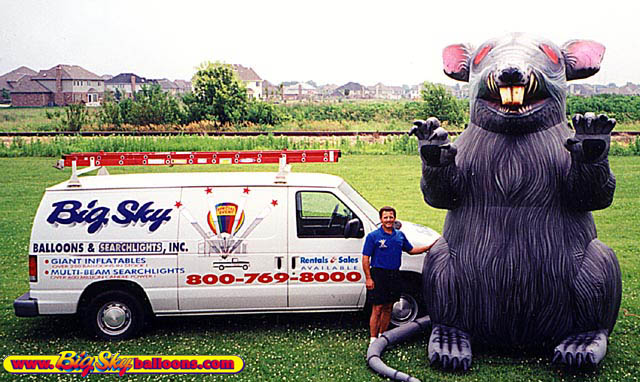
Getting off the bus to get to work this morning, there was a giant, inflatable rat outside an office building in the loop. This is not that unusual (especially here in the Chi), it just means a union is striking outside a job site.

Some things about this particular strike seemed odd, though. For one thing, the picketers were in collared shirts and slacks - some were wearing suits. We don't know of any unions with strike-wear dress codes (though there may be something to that...). Then there was the fact that the strike was outside the University Club building - which is a typical breakfast meeting/cle event locale for attorneys...

Then we noticed the signs - "NLRB: Practice What You Preach."

That's right, folks - the National Labor Relations Board Union is currently picketing the NLRB for failure to recognize it as a certified bargaining unit. Right now, all we've got is the strike flyer, so our information is understandably one-sided (and scant)[ed. note: see updates below]. But we have an email in to the Union directors and we're going to try to contact someone at the Board to get a reaction.

Here's what we know:
[ed. note - see new post here]
- This appears to be a national issue - the flyer quotes Ronald Meisburg, the NLRB General Counsel, as saying "I am refusing to bargain over conditions of employment." (which, whoa - hopefully not, you know? That's pretty much the ballgame)
- The FLRA did apparently certify a bargaining unit, and they did issue a ULP against the Board (that's irony, right?) - according to the union flyer.

If there's something else you know - or want to know - put it in the comments or email us, and we'll get on it.

[UPDATE: 10:23 am] - A little google searching led us to this Press Release from August that we think is the foundation for today's activity. Apparently the NLRB Union petitioned the FLRA to combine some previously separate units, which it did. Then GC Meisburg emailed employees saying he wouldn't bargain with the newly combined unit. The union picketed (we think in New York) in August. The Release goes on to promise more:


Union sources said this would not be the last demonstration demanding
Meisburg’s resignation. They indicated that the Union has plans to picket
at other public events Meisburg attends and will continue until he either
resigns or agrees to obey the law.


So is that why they're at the University Club? Is GC Meisburg gracing us in the Windy City with his presence? Looks like we may have to crash a party or two this morning...

[UPDATE: 11:44 am] - Ok. We've been doing some digging, and it seems like maybe we're a little late to this party. The Union's picketed in a few places, and caused the New Jersey regional office to cancel its 50th Birthday celebration in September by promising to picket Meisburg's presence at the event. Bob Gilson at FedSmith (where we found the Press Release) has a series of articles explaining the history of this sordid, labor law love-triangle, which is 90% assured of making its way into court. Needless to say, we're on pins and needles.

Expect a full post on this mess later in the day.
[UPDATE: Ok, so later in the day actually means four days later or so, but here's the promised post, for those still interested.] Any more updates on today's picketing will be tacked on here.

The text of the strike flyer appears after the jump.


Here's the Text of the Flyer:

National Labor Relations Board
Refuses to Obey Federal Labor Law

On August 19, 2007, the Federal Labor Relations Authority issued an unfair labor practice complaint alleging that the National Labor Relations Board violated its obligation under federal labor law to bargain with the National Labor Relations Board Union, the union of NLRB employees, in the bargaining unit certified by the FLRA.

NLRB:
- Refuses to recognize the certified bargaining unit of its own employees
- Refuses to bargain with the Union
- Ignores FLRA decision
- Violates federal labor law
- DISRESPECTS ITS OWN EMPLOYEES!!

NLRB General Counsel Ronald Meisburg, the chief enforcer of the National Labor RElations Act, told its employees, "I am refusing to bargain over conditions of employment." He has told employees that he will not obey the federal labor law. He has said that he will refuse to bargain with the Union in the bargaining unit certified by the FLRA.

The NLRB is violating the law by refusing to bargain with the Union. If the NLRB does not honor the rights of its own employees, how can employees count on the Board to protect THEIR rights?

WE DEMAND
THAT THE NLRB OBEY THE LAW AND
BARGAIN WITH THE UNION!

NATIONAL LABOR RELATIONS BOARD UNION


Updates will come before the jump.

More After the Jump...

Wednesday, September 26

GM - UAW Reach Tentative Deal

We're gathering information right now - but here's what we know:
1. Most importantly for both sides, the auto workers are going back to making cars this morning (thanking God, probably, that they aren't going to be living on 200 bones a week for the next 6 months.)
2. GM has an official statement that the agreement is finalized, and...wait for it... it looks like there's a VEBA! We knew it! Not on the table our ass.

No more healthcare costs for GM (minus that hefty up-front contribution). Interesting. Does this mark a Womakian shift in Detroit? Everyone seems to think the other Big 2 are going to jump in ASAP. Plus, what does assuming 50 billion in healthcare responsibilities mean for the Union? Does this create solidarity or itnernal strife?

We'll keep updating this post throughout the day, as we learn more. In the meantime, discuss in the comments.

UPDATE [10:32 a.m.]: We got emailed that some people wanted an explanation of a VEBA. We scoured the web for one that wasn't written for IRS auditors (i.e.: BORING), and found this fascinatingly well-composed description on the Hopkins k-12 School District Website. We did the math, and CE started learning about VEBAS in 20th Grade. Apparently that puts us at, like, 7th-grade in Minnesota. Kudos to you, libertarians!

UPDATE [9:15 p.m]: Details are trickling out finally - looks like not only did GM catch up to the Minnesota primary education system, they're also getting the 2-tier salary structure they asked for - down to the dollar. From now on, temp and non-manufacturing workers will start at $18/hour, down $10 from the previous contract.

A lot of people seem to think the UAW is calling this a "victory" way too soon, citing a bunch of unanswered questions (like where the 38 bil will come from to fund the VEBA), and that the union is using the short strike to make this a win, when they did all the conceding. If the NY Times is correct, CE agrees:

In return [for taking over 50 billion in healthcare costs] the union won
guarantees that medical benefits for hourly workers and retirees and their
families will remain in place for the next two years. G.M. will also invest
money in its American plants, and will maintain its current union work force of
73,000.

Won? The union "won" that? So the UAW takes over the next 80 years' worth of healthcare costs in return for a promise by GM to keep making cars. If we didn't know it was the UAW, we'd be worried this was adhesion. No such luck - the CE prognosis: the union caved. Hard. Discuss in the comments.

More After the Jump...

Monday, September 24

Huh? Wha?

Seriously, you turn your back for two months...

We know we promised you a full report on the UAW negotiations on the 24th...of July. In our defense, CE had to work out a few administrative details (see here) that took a little longer than expected. All of the sudden it was the 62nd day of the UAW negotiations, and we were sitting around talking about the Second Amendment or some other arcane, unused law like nothing was going on. Honestly, it's not like they're actually negotiating at the moment, so maybe we just saw this coming and didn't want to waste space on the boring parts. All the same, we're a little embarrassed.

Not as embarrassed as, say, Rick Wagoner's gonna be if this strike thing keeps up. Honestly, did anybody realize the UAW still knew how to strike? Of course, each side is blaming the other for the stoppage, but that's not the interesting part of this story.

According to the New York Times, GM is in a much better position to handle a strike now than it has been in the past, but that's really bad news for the company. Confused? We were. For the Times' analysis, and some more stellar CE commentary, keep reading.

First, how great is Rick Wagoner's name? That guy was born to run a car company.

Anyway, according to production guru James P. Womack, this strike is some kind of watershed moment, marking a change for better or worse in Detroit. He says that though GM has backed away from "defining moments" in the past, someone this time finally said enough's enough. Ok, first: backing away from "defining moments" just shows that GM is still the leader of the American Auto Industry. Plus, as the Times article points out, the car company hasn't done anything yet, and it has a, um, "spotty" track record of standing up to strikes. From the article:

In the past, its response, by and large, was to cave in to U.A.W. demands. That happened during the last big walkout, at two parts plants in Flint, Mich., in 1998. That seven-week standoff occurred when Rick Wagoner, the current chief executive of G.M., was president of its North American operations.

(What does this guy have a 10-year itch or something?)
G.M. never recovered the 31 percent market share it held before the strike, and was forced to offer rebate deals to get customers back into showrooms.

“G.M. has made deal after deal that didn’t deal with fundamental problems,” Mr. Womack said. “This time they have to hold the line on a contract.”

"Hold the line"? Yeah, we may not hold our breath. G.M. has about 2 months of reserves to hit the market - not exactly going to get the dealership guys their Christmas hams. Oh, also: the Times article fails to mention that Womack is the chairman (and founder, apparently) of the Lean Institute, which advocates Toyota Production System application to American industries. While there's nothing wrong with that, we're thinking he may have a little bias in defining those "defining moments".

Regardless, it's the other issue here that has the CE staff buzzing like a Halo 3 Mountain Dew Big Gulp: The link between GM's financial difficulties and its negotiating ability. Again, from the Times piece:

G.M. is better positioned to handle a strike now than in earlier contract talks, though not for reasons that have to do with strength. With its operations shrinking in the United States, the majority of its sales and profits are now coming from abroad.

It is selling more vehicles built in Canada, Mexico, and Europe, the source of new models for its Saturn division. And it is rapidly expanding production overseas, especially in China, which is fast becoming one of the world’s major car markets.

The company’s problems at home, which resulted in losses of more than $12 billion in the last two years, have forced it to close all or parts of a dozen factories, cut tens of thousands of jobs and offer deals to workers to quit or retire. A smaller G.M. means there are far fewer workers involved in this strike, so a halt in production inflicts less pain on the company.

The U.A.W. membership at G.M. has shrunk by more than 80 percent since the 1970 strike, when 400,000 workers were off the job for 67 days.


So, GM falls flat on its face financially, which ends up benefitting its bargaining ability and the bouyancy of its bottom line.* When you view this in the light of GM's major goal in this negotiation, the VEBA it hopes will rescue it from the pensions** of the UAW workers, a cycle emerges that is worth some discussion. Since we make it a point not to take sides, the rest of this topic belongs to you - in the comments.

Talks Continue in G.M. Strike
*Intentional alliteration

One last thing - This VEBA has not gotten much attention (alas, ERISA issues never do), so we're promising you a whole post on G.M.'s VEBA proposal and its potential effect on the situation in Detroit...once we track down our Benefits guy. They're so antisocial in the ERISA department...

**UPDATE: Did we say "pensions"? We meant "health and welfare benefits". Thanks to the tipsters for pointing out our mistake - and we reserve the analysis of the value of our education for another discussion.

More After the Jump...

Thursday, July 19

NLRB: Less "Of the Earth", More "In the Wound"


The NLRB has changed its rules to disfavor “salting” campaigns. Shocker, we know.

But to do it without being asked, in the headwind of a still-young Supreme Court decision protecting salts under the NLRA is pretty ballsy, you have to admit.

Salts, of course, are the much-maligned folks that seek employment at non-union shops for the express purposes of unionizing the company’s workforce. They have the protection of the NLRA, according to the Supreme Court (well, the old one at least), but now the Board has changed the burden of proof in cases where companies refused or fired a salt. From now on (if that phrase is ever applicable to the NLRB), if a salt is going to get back pay for a company’s refusal to give him a job, his union will have to prove that he was planning to stay after he was done, ahem, “seasoning”.

The salting process is typically thought of like this: the union assigns a salt to a particular company. The salt then applies to the company, who either hires him or turns him down. If the salt gets hired, he attempts to unionize the company’s workforce and then moves on to another company as assigned by the union. If the employer refuses to hire a salt, or fires him when they find out why he’s really there, the salt files a refusal-to-hire or unlawful discharge claim with the NLRB, bringing the company’s non-union stance into the fore.

It is deception at its greatest, as far as most non-union companies are concerned. But to the unions, salting may represent their only real chance to gain access to a closed shop.

So, here’s the situation – When an employee is fired, or wrongfully refused a job, he or she is entitled to backpay for the period starting at the employer’s unlawful act (the firing) and going until the act is remedied, usually by an offer of reinstatement. The presumption was that, if hired or retained, the employee would have continued working at the shop for an indefinite period of time. The burden is squarely on the employer’s shoulders to prove why that isn’t the case.

In ’95, the Supreme Court held that salts are protected employees under the NLRA. That means that refusing to hire one of them, or firing one of them, should carry the same consequences as any other employee, right? Here’s where we pick up our most recent Board decision, already in progress:

The Board, in Oil Capitol Sheet Metal, Inc., 349 NLRB No. 118, decided that – for salts – the backpay presumption just doesn’t work. According to the Board, “rote application of the presumption has resulted in backpay awards that bear no rational relationship to the period of time a salt would have remained employed with a targeted nonunion employer.”

The majority (it’s a 3-2 decision) admits that there are times where a union could leave a salt in his position after the salting campaign, but claims that it should be the union’s job to prove it – not the employer’s to prove the salt would leave.

What’s the problem with all of this? Well, according to the dissent, the biggest problem is that nobody asked the Board to reconsider the issue. So, in the face of a Supreme Court decision, and without prompting from any of the parties, the Board has turned 180 degrees in its treatments of salting campaigns. It’s telling that, in referencing the Supreme Court’s holding that salts are people too (to paraphrase a little), the majority makes it clear that SCOTUS displayed “considerable deference accorded to the Board's interpretation of the Act”. I was trained in my labor law class to take this as a sign to the Circuits that they should reconsider the issue. Is the Board trying to fire a case up to the Supremes now that their ranks have shifted?

So, now here’s the question – is the change in policy justified? Given the nature of salting, isn’t it better to presume the employee is temporary? It is a pretty big burden on the employer to prove a negative, but they still have to do it in wrongful discharge cases of non-salt employees, so is that really a good justification for the change?

Oil Capitol - via Law Memo

More After the Jump...
Thursday, July 5

So it begins...

I have been trying all day to figure out how to appropriately open CE's doors - what first post would really capture the purpose and importance of what we're trying to do here, and I had come up with zero. Then the Chicago Tribune did all my work for me.

Right on the front page of the Business section was this article. It details how the Senate's energy bill (requiring all vehicles to average 35 miles per gallon by 2020) may be the final straw for a few key truck- and suv-manufacturing plants. According to the article, the current law has different requirements for cars than for trucks and suv's.

The thing that struck me was that the UAW is supporting an alternative measure in the House that would raise the corporate average fuel-economy rating to 32-35 mpg by 2022. A little better, right? Wrong, say the workers at the plants that might close. They produce a product that currently gets 16 mpg. So even the plan their union supports wouldn't keep them in their jobs.

The article outlines some workers and former workers - all of whom are supplementing their income. One guy installs solar panels, but says business is "kind of slow". A retired employee is working at a food processing plant, where he makes $15/hour. "A far cry from the $27 that GM paid."

With negotiations between the UAW and the Big 3 looming, does anyone think the issue of fuel economy will even have a minute's worth of debate? Probably not. Plant closures are nothing new these days, and there are a lot of other issues that will take precedent at that table (retiree benefits, anyone?). So, what about this article makes it opener-worthy? Well, nothing - on it's own.

It's just that, for some reason, the Trib posts its almanac and obituaries in the inside pages of the Business section. So, right across the page, as I'm finishing the UAW article, tucked away on page 3, in tiny font, is the following:

ALMANAC, published July 5, 2007...
In 1935 President Franklin Roosevelt signed the National Labor Relations Act, which authorized labor to organize for the purpose of collective bargaining.
Hmm. It has been a long 72 years since the NLRA came into being. Now, the unions are finding themselves conceding hard-won benefits to their employers just to keep the businesses - and in the case of the UAW, the whole industry - afloat. It seems every modern movement, from globalization to universal healthcare to, apparently, environmentalism is affecting the Union's (capital U) chance for survival as an effective way to do business. The future of the labor movement is unstable, and creative solutions are few and far between.

Is the movement in flux? Or is this the end of an experiment that began with that Almanac entry? Our best attempt at finding answers starts here, in the comments. See you there.

Chicago Tribune: M.P.G. bill could cost UAW jobs
Almanac - July 5, 2007

More After the Jump...